 Jump to recipe
Fluffy. Chewy. Amazing!
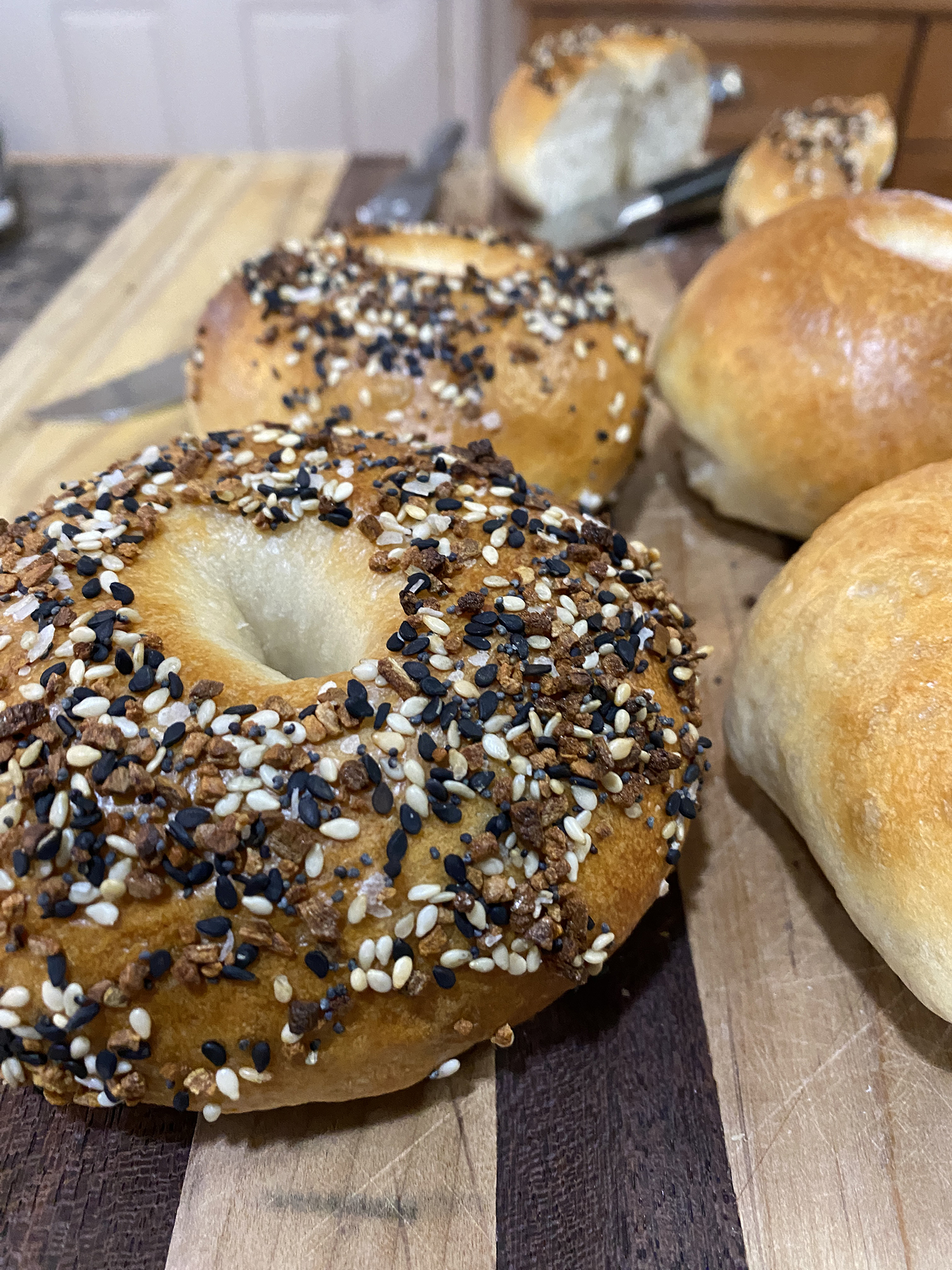
If you’ve never had homemade sourdough bagels, you are seriously missing out. With just 10 minutes of prep, this easy overnight recipe uses active sourdough starter. It makes for soft and chewy New York-style bagels that are absolutely amazing!

Sourdough bagels are the complete opposite of traditional yeasted bagels. They’re less dense and way more flavorful. The crust is thin, crispy and incredible. You really need to eat one or two warm out of the oven and thank me later.
Even though it might sound daunting, I promise the process is straight forward. This post breaks it down step-by-step, from making the dough, to shaping, boiling, and baking the bagels.

Sourdough Bagels Ingredients:
- Bubbly, active sourdough starter
- Good quality bread flour
- Optional mixed toppings, such as Everything Bagel Spice, poppy, sesame, flax or sunflower seeds
How to Make Homemade Sourdough Bagels
Sourdough bagels include several steps, which can be broken down into manageable chunks. I recommend splitting the process over 2 days. Make the dough in the evening and let rise overnight; shape, boil and bake the bagels following day.
Step #1: Mix the Dough
- Whisk the water, sourdough starter and sugar together in a large bowl. Add the flour and salt. Combine to form a rough dough; it will be very dry and stiff. Tip: you really need a large bowl. This dough is very strong and rises quite high especially when using King Arthur Flour.
- Cover and let rest at room temperature for 1 hr to relax the gluten. Return to the bowl, and work the dough into a semi-smooth ball. You’re are now done with the dough.
TIP: Why is the dough so dry? Bagels require a low hydration dough. The dry, stiff texture is easy to shape and produces a tight-knit interior crumb. This is what you want for bagels. Do not be tempted to add more water!
Step #2: Bulk Rise
Cover the dough, and let rise overnight at room temperature until double in size. This should take about 10-12 hrs @ 68 F; 8-10 @ 70 F.
Step #3: Shape the Bagels
- Divide dough into 8 equal pieces, about 115 g each. Use a digital kitchen scale for accuracy.
- Roll each piece into a ball. Place onto a parchment-lined sheet pan. Rest for 10-15 minutes.
- Poke a hole into the center of each dough. Gently stretch the opening, using your fingers to roll it around.
Step #4: Second Rise
- Now the dough needs to rise again, but only for a short period of time. Cover and let rest at room temperature for 20 minutes; the dough will puff up slightly.
- Meanwhile, boil a pot of water. Add the honey (this adds color and flavor to the crust) and whisk well.
- Preheat your oven to 425 F. Set up a topping station: add seeds to a rimmed tray or shallow bowl.
Step #5: Boil The Bagels
- Gently lower 2-3 bagels into the pot and let float to the surface. Simmer for 30 seconds on each side.
- With a large slotted spoon, transfer the bagels onto the sheet pan, rounded side up. They will look bumpy and feel slightly wet.
TIP: Why boil bagels? It helps to set the crust before baking. Otherwise the dough would puff up and rise too high. You can’t skip the boiling step- it’s what makes bagels different from bread.
Step #7: Top Bagels with Seeds
- When the bagels are slightly cool but still wet, dip the rounded side into the toppings. Leave a few plain.
- Place back onto the sheet pan.
Step #8: Bake the Bagels
- Put the sheet pan into the oven and bake for 20-25 minutes @ 425 F.
- Transfer to a wire rack to cool slightly (but please, eat one warm, straight from the oven!)
- To serve, top with salted butter, cream cheese, smoked salmon etc. Or just eat plain. You can’t lose!
How to Store Bagels
Your first batch of homemade bagels will be devoured immediately. They’re THAT good.
But, if you do have any leftover, store in a plastic bag at room temperature for up to 2 days.
Bagels also freeze well; freeze them sliced, covered in plastic wrap and a layer of foil, for up to 3 months. Warm in a low oven or toaster before serving.
Sourdough Bagels


Notes
Water temperature: In winter, I use 85-95 F water (29-35 C) to give the rise a boost. In summer, I use cooler water, about 55-60 F (13-16 C) to slow down and control the rise.
Ingredients
- For *the* dough
- 150 g (3/4 cup) bubbly, active sourdough starter
- 250 g (1 cup plus 2 tsp) warm water (See Notes below for temperature range)
- 24 g (2 tbsp) granulated sugar
- 500 g (4 cups plus 2 tbsp) bread flour
- 9 g (1 1/2 tsp) fine sea salt
- Cooking spray or oil, (for coating the plastic wrap)
- For *the* water *bath*
- 20 g (1 tbsp) honey
- Toppings
- Mixed seeds, such as poppy, sesame, fennel, flax and sun flower seeds or Everything Bagel Spice
Instructions
- 1. Make *the* dough: In a large bowl, whisk the starter, water, and sugar together with a fork. Add the flour and salt. Combine to form a rough dough, then finish mixing by hand until no lumps remain. The dough will be very stiff and dry. Note: it’s important to use a large mixing bowl – this dough is strong and rises quite high.
- 2. Cover the dough with a very damp towel and let rest for 45 minutes to 1 hour. After the dough has rested, work the mass into a semi-smooth ball, about 15-20 seconds.
- 3. Bulk *Rise:* Cover the bowl with plastic wrap that has been lightly coated in oil to prevent sticking. Let rise until double in size, about 10-12 hours when the temperature is 68 F (20 C); 8-10 hours @ 70 F (21 C). Note: In the summer, rise the dough during the day. Once the dough is almost double in size, cover and chill the whole bowl overnight (it will continue to rise slightly in the fridge). Proceed using the cold dough the following day.
- 4. Shape: Line a sheet pan with a nonstick silicone mat or parchment paper. If using parchment, lightly coat with cooking oil or oil to prevent sticking.
- 5. Remove the dough onto a non-floured work surface. Flatten the dough into a rectangle and divide into 8 equal pieces, about 155 g (4 oz) each. Gather the ends, flip the dough over, and roll each piece into a ball. Let the dough rest on your lined sheet pan for 10 to 15 minutes to relax the gluten.
- 6. Working with one ball of dough at a time, poke a hold straight through the center. Move your finger around in a circular motion to gently stretch the dough until the hole is about the size of a walnut. You can also life up the dough, insert both index fingers through the center hole, and berrel roll to gently stretch the opening. When finished, place the dough back onto the sheet pan. It’s ok if the hole shrinks slightly. Repeat shaping the remaining dough.
- 7. Second *Rise:* Cover the dough with a damp towel and let rest at room temperature for 15 to 20 minutes. The dough will puff up only slightly at this stage.
- 8. Meanwhile, bring a medium pot of water to a boil. Add the honey and whisk well to dissolve. Preheat your own to 425 F (220 C). Add the seeds to a rimmed tray or shallow bowl.
- 9. Boil *the* bagels: Add 2 to 3 bagels into the pot and simmer for 30 seconds on each side. Note: If using cold dough from the fridge, the bagels might not float to the surface right away. Give them a nudge after 30 seconds or so and be patient. Using a slotted spoon, transfer the bagels back to the sheet pan you used earlier, placing them rounded side up.
- 10. Once slightly cool but still wet, dip the rounded side of the bagels into the seeds to coat. Place back onto the sheet pan and finish boiling the rest of the bagels.
- 11. Bake: Place your sheet pan on the center rack. Bake the bagels for about 20 to 25 minutes. Flip them over to briefly cook the bottom side, about 1 to 2 minutes or less. When ready, your bagels will be puffed up, light golden brown, and feel light to the touch. Transfer to a wire rack to cool, but indulge yourself and eat one (or two) warm.

